

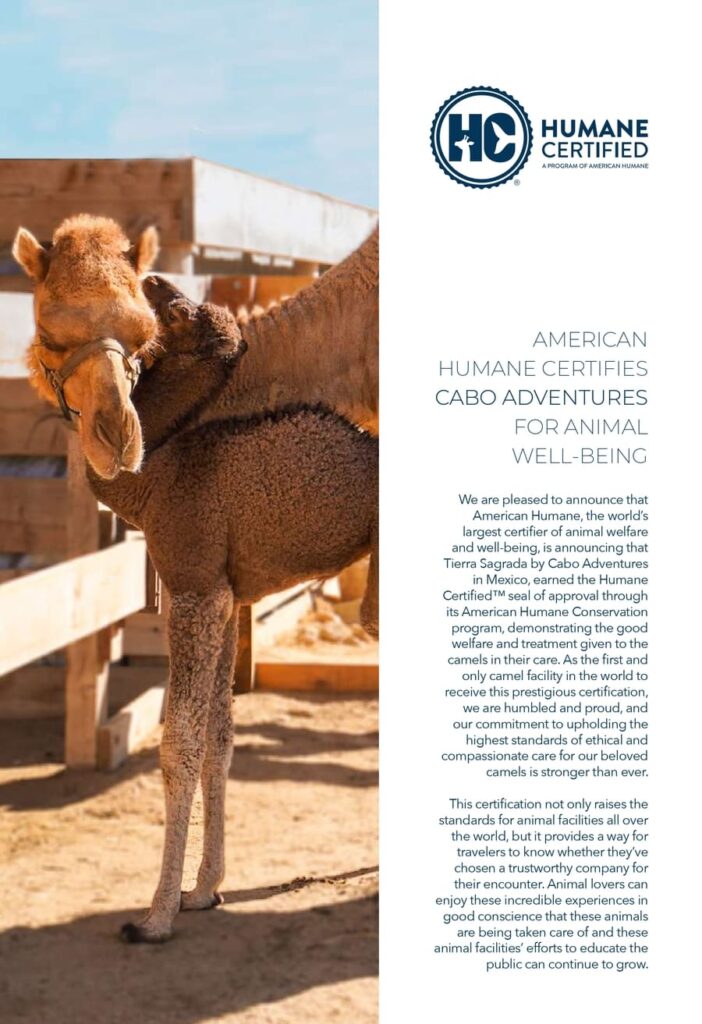
If you’ve ever Googled “why are there camels in Cabo?” you’re not alone. Los Cabos is famous for beaches, the arch, and desert landscapes—not for camels. Yet camel tours have become one of the most memorable “only in Baja” experiences, and there’s a real reason they work here.
This guide explains (1) why camels are in Baja in the first place, (2) why the Los Cabos environment is a surprisingly good fit for camel experiences, and (3) what to ask before you book if you care about safety and animal welfare.
Quick answer: camels aren’t native to Cabo—people brought them, and the Baja desert suits them
Camels are not native to Baja California Sur. The reason you can see camels in Los Cabos today is simple: camels are domesticated animals, and humans have transported domesticated animals around the world for centuries. In the right conditions—with experienced handlers, appropriate care, and responsible operations—camels can live comfortably in climates that resemble the arid environments they’re adapted to.
Los Cabos has that “desert-meets-ocean” setting: warm sun, dry air, open ranch land, and photogenic scenery. That combination is why camel tours feel so natural here even though the animals didn’t originate in the region.
Why the Los Cabos landscape makes camel tours make sense
When guests picture Cabo, they think of the sea. But step a little inland and you’re in a true desert ecosystem—dusty trails, cacti, rock formations, and wide-open skies. That matters because:
- Dry climates are familiar territory for camels. They’re built for heat management and long-distance walking on sand/packed earth—when the operation respects safe timing and workload.
- Cabo’s scenery is “cinematic.” Desert textures + ocean backdrops create photos that don’t look like anywhere else in Mexico.
- It’s a real contrast to the typical Cabo day. If your trip is beach, marina, tacos, repeat—camel rides add a totally different side of Baja.
So… how did camels end up in Cabo?
There isn’t one single “official” origin story that applies to every camel program in Los Cabos. What is true is that camels are domesticated and can be raised on ranches far from their ancestral habitats—similar to how you’ll find horses, goats, and other livestock across environments worldwide.
In Baja, the idea caught on because it pairs perfectly with what travelers already want: a safe, guided desert experience that feels unique, is easy to fit into a vacation day, and creates once-in-a-lifetime memories for couples, families, and groups.
What a camel tour in Cabo is like (and what it is not)
A camel tour is not a long expedition across miles of dunes. It’s typically a guided experience on a ranch/trail system designed for guest safety and camel comfort. Most guests are surprised by two things:
- Camels are tall. Guests board from a platform, which makes getting on easy and comfortable.
- It’s more comfortable than people expect. You sit in a stable saddle setup, and the pace is controlled—though you should still listen closely to the guide and hold on when instructed.
If you want a detailed walkthrough of the full experience, start here: What actually happens on a camel ride in Cabo (step-by-step).
Answering the big booking objections (without hype)
“Is it ethical? Are the camels treated well?”
It’s a fair question—and it’s exactly the right mindset to have before booking any animal experience. Because policies vary by operator, the safest approach is to choose based on observable signals. Look for tours that clearly communicate:
- Handlers/guide supervision at all times
- Shade/water access and rest periods (especially in warm months)
- Clean tack/saddles and calm camel behavior (no obvious distress)
- Clear guest rules (no rough handling, no feeding unless permitted, etc.)
If you’d like to compare options and pick the right format for your group, these pages can help you decide what to book:
“Is it safe?”
A well-run camel tour is designed around controlled pace and clear guide instructions. Your part is simple: follow the briefing, keep your hands where the guide tells you, and don’t try to improvise for photos while moving. If you’re unsure whether a camel ride fits your group, treat this post as a conversation starter—and confirm details with the operator before you pay.
“Is it worth it, or is it just a gimmick?”
People call it a “gimmick” until they do it. The reason camel tours have staying power in Cabo is that they combine three things travelers actually value:
- Novelty: most guests have never ridden a camel anywhere.
- Scenery: the Baja desert is a different world from the marina.
- Ease: it’s guided and vacation-friendly—no special skills required.
FAQ: the most common “why camels?” questions
Are there wild camels in Baja?
No—camels you see in Cabo are part of managed programs. Baja’s native wildlife is different (think reptiles, birds, and desert-adapted mammals), and camels don’t exist here as a native wild species.
Is riding a camel uncomfortable?
Most guests find it easier than expected. The “surprise” is mainly the height—boarding from a platform makes it straightforward. If you have concerns about mobility or comfort, ask ahead of time so the operator can advise what’s appropriate.
Will I get good photos?
Yes—Cabo’s desert backdrop is the real secret. For the best results, wear solid colors, bring sun protection, and plan your timing so you’re not rushing from one activity to the next.
Ready to book your camel ride in Cabo?
If the “why are there camels in Cabo?” question was the only thing holding you back, you’re now in the informed majority: camels aren’t from Baja, but the Baja desert is one of the most striking places to experience them—when the tour is run responsibly.
Planning your camel ride in Cabo?
See pricing, availability and complete your reservation in a few minutes.
Ride camels along the Pacific in Los Cabos
Calm pace, family-friendly, transparent pricing. Reserve with a small deposit.
Explore the camel ride